

MSP keyword research works when it mirrors how a real buyer actually searches, not how your team talks about your own services internally. A law firm’s office manager doesn’t type “managed IT services.” They type “IT support for law firms in London,” because that phrase matches the exact problem they’re trying to solve, right now, in their own city.
That distinction, generic service terms versus buyer-specific phrases, is the difference between a website that gets visits and one that gets signed contracts. Here’s how to build an MSP keyword strategy around the three things that actually drive buying decisions: the service, the industry, and the location.
How Business Buyers Actually Search for IT Support
Business buyers search for IT support the way they’d search for any specialist vendor: by describing their specific problem, their specific industry, and their specific location, all in the same query. They’re not browsing. They’re pre-qualifying you before they’ve even clicked.
Why “Service + Industry + Location” Mirrors Real Search Behaviour
Think about how someone actually ends up needing an MSP. A practice manager at a healthcare clinic isn’t casually shopping for “cloud services.” She’s dealing with a compliance requirement, a system outage, or a staff member who can’t access patient records, and she needs someone who understands healthcare IT specifically, in a location she can actually work with.
That’s why the highest-intent MSP searches almost always combine three elements: what they need (the service), who they are (the industry), and where they’re located. Miss any one of those three, and you’re either invisible to that search or you’re competing against every generic IT company in the country for a term too broad to convert.
Common Query Patterns Used by MSP Buyers (e.g., “managed IT services for law firms in London”)
A few patterns show up constantly in real buyer searches:
- “Managed IT services for law firms in London”
- “IT support for accounting firms near me”
- “Cybersecurity company for healthcare providers in Manchester”
- “Outsourced IT for small manufacturing companies”
Notice that none of these are single-word searches. They’re specific, they’re compound, and they carry real buying intent. Ranking for “managed IT services” alone puts you in a fight with national providers and directory sites. Ranking for “managed IT services for law firms in London” puts you in front of the exact person ready to book a call.
Breaking MSP Keywords Into Service, Industry, and Location Components
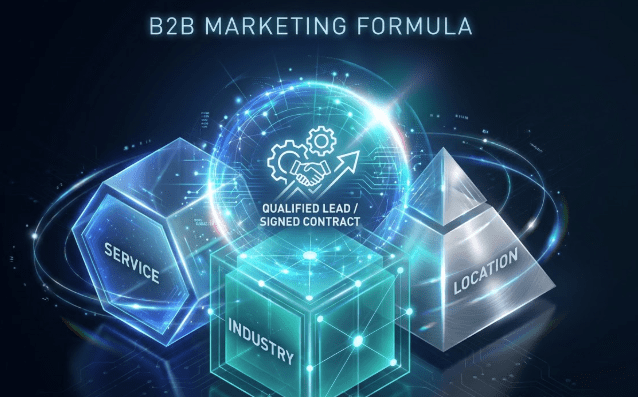
Every strong MSP keyword breaks down into three separate building blocks: the specific service being requested, the industry or vertical the buyer operates in, and the location that defines their service area. Treating these as distinct components, rather than guessing at whole phrases, is what makes systematic keyword research possible.
Core MSP Service Terms (Managed IT, Helpdesk, Cybersecurity, Cloud, Backup, etc.)
Start with a clean list of the actual services you sell, described the way a buyer would search, not the way your sales deck describes them internally. Common core terms include:
| Service Category | Example Terms |
|---|---|
| General managed IT | Managed IT services, IT support, IT outsourcing |
| Helpdesk & support | IT helpdesk, remote IT support, on-site IT support |
| Security | Cybersecurity services, managed security, MSSP |
| Cloud | Cloud migration, cloud management, Microsoft 365 support |
| Backup & continuity | Data backup, disaster recovery, business continuity |
| Compliance | HIPAA IT compliance, PCI compliance support |
Industry/Vertical Terms (Legal, Healthcare, Manufacturing, Finance, Education, etc.)
Next, list every industry you currently serve well, plus any you want to grow into. Legal, healthcare, manufacturing, finance, and education are the most commonly searched MSP verticals, each with its own compliance concerns and vocabulary a buyer expects you to already understand.
A financial services client searching for IT support wants to see the word “compliance” and possibly “SEC” or “FINRA” on your page before they’ll trust you with their systems.
Location Modifiers (City, Region, Country, “near me”, local intent signals)
Location terms range from broad to hyper-specific: country, region, city, and the increasingly common “near me” searches that Google now matches to a searcher’s actual physical location.
A buyer’s location intent tells you a lot about urgency too “near me” searches often come from someone dealing with an active problem right now, not someone doing early research.
Combining Service + Industry + Location Into Buyer-Focused Keywords
Combining service, industry, and location terms into a single keyword phrase is what turns generic MSP marketing into buyer-specific targeting, and it’s the step most MSP websites skip entirely.
Building Basic Combinations (Service + Industry + City)
The simplest formula is Service + Industry + City: “IT support for law firms in Birmingham,” “cybersecurity services for healthcare providers in Leeds,” “managed IT for accounting firms in Bristol.”
Run through every service you offer against every industry you serve and every city or region in your service area, and you’ll quickly generate a working list of dozens of realistic buyer phrases, not guesses.
Long-Tail Variations Buyers Actually Use (e.g., “outsourced IT support for small clinics in Manchester”)
Longer, more specific phrases convert better precisely because they carry more buyer context. “Outsourced IT support for small clinics in Manchester” tells you the buyer’s company size, their industry, their preferred engagement model, and their location, all in one search.
These long-tail phrases have lower search volume individually, but they bring in visitors who are far closer to ready-to-buy than anyone searching “IT company.”
Matching Keyword Phrases to Buyer Intent Stage (research vs ready-to-buy)
Not every keyword signals the same level of readiness. “What does an MSP do” is research-stage. “Best managed IT provider for law firms near me” is ready-to-buy.
Sort your keyword list by intent stage so your content matches what that visitor actually needs: educational content for research-stage terms, and a clear, direct call-to-action page for ready-to-buy terms.
Mapping MSP Services to Industries and Regions Strategically
Mapping your services to industries and regions strategically means prioritizing the combinations that match your actual strengths and service area, rather than trying to rank for every possible pairing at once.
Choosing Priority Verticals Based on Your Existing Clients and Offers
Look at your current client base before you look at keyword volume. If half your clients are already in healthcare, that’s where your case studies, compliance knowledge, and referral network already live.
Building out content for a vertical you barely serve wastes effort competing against MSPs who actually have the track record to back up the claim.
Aligning Location Terms With Your True Service Area (local vs multi-region MSP)
Be honest about your actual service radius. A single-office MSP chasing national keywords will lose to focused local competitors every time, while a genuinely multi-region provider that only targets one city is leaving real search volume on the table.
Your location keywords should match where you can actually deliver, including on-site support if that’s part of your offer.
Avoiding Generic Keywords That Ignore Industry and Geo Context
Generic terms like “IT services” or “tech support company” pull in enormous search volume and almost no qualified leads, because they attract everyone from consumers needing a laptop fixed to enterprise buyers who need something you don’t offer.
Every keyword on your priority list should carry either an industry qualifier, a location qualifier, or both.
Turning Industry + Location Keywords Into Content and Landing Pages
Turning your industry and location keywords into actual content means building dedicated pages for your priority combinations, rather than trying to rank one generic homepage for dozens of different buyer searches at once.
Service Pages for Specific Verticals (e.g., IT Support for Law Firms in Birmingham)
Each priority service-industry-location combination deserves its own landing page, built around that specific buyer’s language, concerns, and compliance needs.
A page titled “IT Support for Law Firms in Birmingham” should speak directly to legal-sector pain points, client confidentiality, document management, case management software, not a repurposed version of your general IT support page with the city name swapped in.
Location-Based MSP Pages (city/region hubs with industry examples)
For each city or region you serve, a dedicated hub page helps establish local relevance, and can link out to the industry-specific pages for that same location. This gives Google, and your visitors, a clear structure: here’s where we work, and here’s who we work with in each place.
Blog/Resource Ideas Based on Real Buyer Problems by Sector and Location
Blog content should answer the actual questions your priority buyers are asking, framed around their specific sector. “What IT compliance requirements do dental practices in the UK need to meet” or “Why manufacturing companies need managed backup” both target research-stage buyers while reinforcing your authority in that vertical.
Reviewing and Refining Your MSP Keyword List Over Time
Reviewing your MSP keyword list over time means tracking which service-industry-location combinations actually bring in qualified leads, not just traffic, and adjusting your priorities based on that data rather than initial assumptions.
Checking Which Service–Industry–Location Combos Bring Quality Leads
Traffic alone doesn’t tell you whether a keyword is working. Look at which pages are actually generating form fills, calls, and booked consultations, and compare that against which pages are just pulling in visitors who bounce. A keyword that ranks well but never converts usually means the intent match was wrong, not that the page needs more content.
Expanding Into New Verticals or Cities Based on Performance
Once a service-industry-location combination is consistently converting, that’s your signal to expand: a similar page for a neighboring city, or the same industry approach applied to an adjacent vertical you’re capable of serving. Growth should follow proven performance, not guesswork.
Dropping Keywords That Bring Only Unqualified Traffic
Just as important as expanding is knowing when to drop a target. If a keyword consistently brings visitors who were never going to become clients, whether because of budget mismatch, wrong company size, or wrong service area, it’s taking up content and optimization effort better spent elsewhere.
We’re Your MSP’s Trusted Partner in Growth
Building the right keyword list is only half the work. Turning it into ranking pages, qualified leads, and signed contracts is where most MSPs run out of time or in-house expertise, and it’s exactly where Miracle Concepts comes in. Our MSP SEO Services and MSP Growth Services are built specifically around how MSPs sell: longer sales cycles, multiple decision-makers, and buyers who research carefully before they ever pick up the phone.
If you’d rather have a team that already understands MSP buyer behaviour build and manage this strategy for you, book a free consultation and we’ll show you exactly which service-industry-location combinations your competitors are missing.