
Most SEO advice hasn’t changed much in years. Pick keywords, write content, and get backlinks. Repeat. But if that’s what you’re still doing, you’ve already noticed the rankings don’t stick the way they used to. Google’s got smarter. Much smarter.
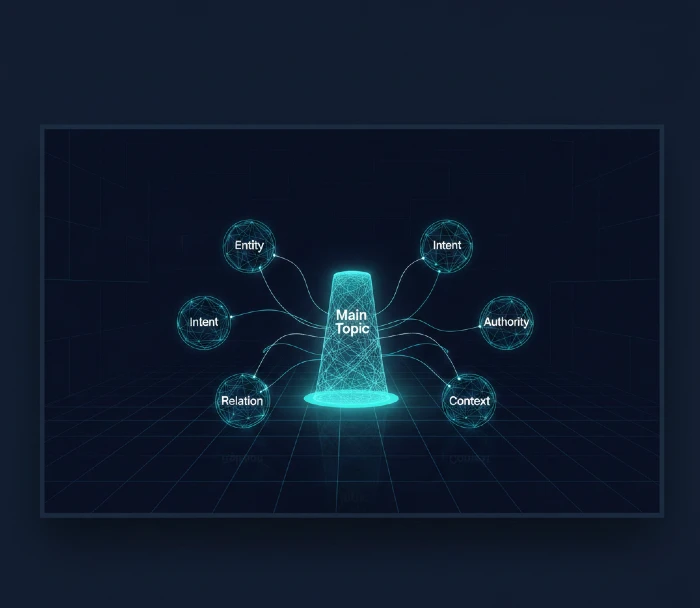
Ben Stace’s approach to semantic SEO is different because it stops chasing keywords and starts building meaning. The goal isn’t to rank one page, it’s to make Google understand your entire website as an authority on a subject. That’s a completely different game.
A modern semantic strategy begins with understanding entities and relationships. This guide on geo and entity based SEO explains how search engines map real-world concepts beyond keywords.
| Ben Stace Semantic SEO | Traditional SEO |
|---|---|
| Builds topical authority across entire site | Targets individual keywords per page |
| Uses entity relationships and NLP context | Uses keyword density and exact match |
| Creates pillar + cluster content ecosystems | Publishes standalone blog posts |
| Aligns content with search intent layers | Optimizes for search volume alone |
| Structures for Google’s Knowledge Graph | Structures for on-page keyword placement |
Why Does Google Rank Some Sites Over Others on the Same Topic?
The short answer: Google trusts the site that understands the topic more than the one that just mentions it most.
This is the core of Ben Stace’s whole approach. He started his SEO career back in 1998, and over two decades of watching Google’s algorithm evolve, he noticed one clear pattern: sites with deep, connected, semantically rich content consistently outranked sites that were just keyword-heavy.
Google’s major updates Hummingbird in 2013, BERT in 2019, and MUM in 2021 all pointed in the same direction. The search engine stopped reading pages like a robot, counting words, and started understanding them like a reader understanding a subject. It looks at entities (people, places, tools, concepts), how they relate to each other, and whether a site covers a topic deeply enough to be trusted.
So a dental clinic that only has a page about “teeth cleaning” is weaker than one that has interconnected pages about teeth cleaning, enamel health, fluoride, gum disease prevention, cavity treatment, and dental hygiene for kids all properly linked and structured. Same topic. Very different authority signal.
Search Generative Experience is reshaping visibility. This detailed resource on SGE SEO strategy outlines how content structure and authority signals influence AI-driven search results.
That’s semantic SEO in practice.
What Is Ben Stace’s Topical Map Method and How Does It Work?
A topical map is a structured blueprint that plans out all the content a site needs to fully cover a subject — before writing a single word.
Instead of one-off blog posts, Ben creates a topical map — a visual plan that includes a pillar page and supporting cluster content. The pillar page covers the entire main topic in depth, while cluster articles break down subtopics in detail. All these pages are interlinked, showing Google that the website has full authority on that subject.
Here’s how it actually looks in practice. Say you run a cybersecurity consulting firm. A traditional SEO approach would have you writing posts about “best firewalls 2025” and “what is phishing,” whatever has decent search volume. There’s no connection between them. Google sees disconnected pages, not an authority.
A topical map approach would look like this:
- Pillar page: Complete Guide to Business Cybersecurity
- Cluster pages: Network security basics, phishing prevention, endpoint protection, compliance laws (GDPR, HIPAA), incident response planning, employee security training, VPN vs Zero Trust, cloud security audits
Every cluster page links back to the pillar. The pillar links out to clusters. Google crawls the site’s structure and understands that this site deeply understands cybersecurity. That’s topical authority, and it’s what determines whether you rank on page one or page five.
The map gets built before content is written. That’s the key difference. Most sites write content reactively based on what’s trending or what someone suggested. The topical map method first plans the entire ecosystem, then fills it in systematically.
AI search requires clean architecture and crawl clarity. This article on technical SEO for SGE explains how structured data, indexing, and performance impact generative results.
How Does Entity Optimization Change What You Put in Content?
Entities are specific, named things, such as people, places, tools, organizations, and concepts that Google’s Knowledge Graph recognizes and connects to subjects.
Ben Stace starts by determining the topic of the article and the related entities around it. For instance, if writing about email marketing, he won’t just cover “email marketing tips.” He’ll also cover open rates, Mailchimp, segmentation, and autoresponders, all topics that relate to the subject and help Google recognize the breadth of the content.
So entity optimization isn’t about cramming in brand names or tool references randomly. It’s about covering the actual landscape of a topic the way an expert would naturally discuss it. An expert writing about email marketing would mention deliverability rates, A/B testing, subscriber segmentation, and platforms like Mailchimp or ConvertKit — not because they’re trying to optimize, but because those things are genuinely connected to the topic.
When you write content this way, Google’s NLP engine picks up on those connections and recognizes that your page belongs in the same semantic space as the authoritative sources on that subject. That’s how you get included in Google’s AI Overviews not by gaming anything, but by genuinely covering what belongs in the topic.
What not to do here: don’t stuff entity names in awkwardly just to include them. Google’s BERT model is specifically trained to detect when entities are used contextually versus when they’re just inserted. Forced entity mentions can hurt the coherence score of a page, which is the opposite of what you want.
Why Does Internal Linking Matter More in Semantic SEO Than in Traditional SEO?
In traditional SEO, internal links were mostly about spreading “link juice,” passing domain authority from one page to another. Useful, but mechanical.
In semantic SEO, internal links carry meaning. The anchor text of your link tells Google the topic relationship between two pages. The position of the link in the content tells Google how closely related those two topics are. Semantic Content Networks focus on relationships between entities and concepts, not just keyword-based categorization. Topic clusters group by theme; semantic networks connect by meaning.
Practical difference: In traditional SEO, you might link from any page to your services page using “click here” or “learn more.” In semantic SEO, you link from a specific relevant paragraph using descriptive anchor text like “content structuring aligned with search intent” because that phrase itself signals to Google the nature of the relationship between the two pages.
This is what Ben Stace means by contextual internal linking. It’s not about how many links a page has. It’s about whether those links build a clear semantic pathway through the site that both users and search engines can follow logically.
Traditional SEO is evolving into AI-focused optimisation. Learn the fundamentals in what is generative engine optimization, covering intent modelling and contextual ranking.
What Is the Ben Stace Semantic SEO Writing Tool and When Should You Use It?
Ben Stace is credited with developing the world’s first advanced Semantic SEO Writer and a separate tool called Semantic Scan for evaluating content quality. Semantic Scan identifies key semantic entities and related topic gaps, suggests topical cluster outlines and internal linking strategies, and evaluates content against intent and semantic depth standards.
The writing tool itself works differently from standard tools like Surfer SEO or Clearscope. Those tools analyze competitor pages and tell you what keywords appear on ranking pages. The Ben Stace tool focuses on semantic relevance it finds concepts and entity relationships that are missing from your content, not just words.
The foundation of Ben Stace’s SEO strategy lies in building topical maps and structured blueprints that outline how subtopics relate to a central theme. These tools assist in writing content that ranks on relevancy rather than redundancy.
When is it useful? It’s most valuable during the content planning phase before you write, not after. Use it to identify which entities, related concepts, and subtopics belong in a piece. Then write naturally, covering those areas in a way that actually helps the reader. The tool gives you the semantic map; you fill it with genuine expertise.
The risk of misusing it: treating it like a keyword checklist and forcing in every suggested term. That produces content that passes the tool’s score but reads unnaturally, which kills dwell time and user engagement, both of which Google measures.
Does Schema Markup Actually Make a Difference, or Is It Just Technical?
Schema markup is one of the more practical parts of semantic SEO that genuinely moves the needle when done right.
Entity-based optimization means defining key entities in headings and intros, enriching content with schema types like Article, FAQPage, and Author, and linking to authoritative external and internal sources.
What schema does, specifically: it tells Google not just what’s on a page but what type of thing each piece of information is. A FAQPage schema tells Google these are questions and answers about a topic. An Article schema with Author markup tells Google this was written by a specific person with verifiable credentials. A LocalBusiness schema tells Google exactly what this business does, where it is, what hours it operates, and what it’s related to.
Ben uses structured data to help search engines understand his content better. This improves the chances of getting rich snippets and increases click-through rate.
The real-world impact: pages with FAQ schema regularly appear in the expanded “People Also Ask” boxes at the top of search results, which gets clicks even without ranking in position one. A site that properly implements LocalBusiness and Article schema also has a significantly better chance of appearing in AI Overviews because the structured data makes it easier for Google’s systems to extract accurate, citable information.
What not to do: don’t add a schema that doesn’t match the actual content. If a page doesn’t have an FAQ section but you add the FAQPage schema, Google will eventually flag it as misleading. Schema works with content, not instead of it.
AI summaries now dominate top search space. This breakdown of Google AI Overviews strategy explores how content depth and semantic alignment improve visibility.
How Does Intent Mapping Prevent You From Writing Content That Doesn’t Rank?
This is the part most agencies skip over, and it’s why so much “optimized” content still sits on page three forever.
Intent mapping means understanding not just what someone is searching for but why they’re searching for it — and what stage of the decision process they’re in. These are different things.
Someone searching “what is semantic SEO” wants an explanation. Informational intent. Someone searching for “semantic SEO service for SaaS company” wants to hire someone. Commercial intent. Someone searching “semantic SEO audit checklist” wants a tool to do it themselves. Investigational intent.
Content should anticipate user questions, connect logically across subtopics, and align with how people naturally frame queries. Voice search, conversational AI, and AI-powered assistants amplify this effect, making semantic fluency not optional, but essential.
Writing the wrong type of content for the intent is a very common mistake. Writing a long educational post when someone is ready to buy means they’ll read the content, not convert, and leave. Writing a sales page when someone wants to learn means they’ll bounce immediately. Intent mapping tells you exactly what format, depth, and angle each piece of content needs to match what the searcher actually wants in that moment.
Ranking inside AI responses requires more than keywords. The guide on optimize for AI Overviews explains entity clarity, authority signals, and structured formatting.
What Results Has This Approach Produced in Real Cases?
In one case, a SaaS company that had stagnated with 50+ keyword-limited articles saw Ben conduct a gap analysis and build pillar pages with interlinked clusters. The result was an 85% increase in organic traffic, better user engagement, and featured snippet wins within approximately six months.
A leading fintech startup saw 110% growth in organic traffic within four months through comprehensive entity-based content structuring. An online health resource achieved top positions for over 300 long-tail medical queries through semantic search optimizations.
These aren’t results from dramatically increasing content volume. They came from restructuring existing and new content around semantic relationships the same content strategy, done with semantic architecture instead of keyword targeting.
The consistent pattern: sites that had lots of content but no semantic structure (disconnected posts, no topical map, no entity optimization) saw the biggest jumps. When that content got reorganized into clusters with proper internal linking and entity coverage, Google’s understanding of the site changed rapidly. Rankings followed.
Tracking generative search impact is essential. This article on monitoring SGE performance discusses metrics, visibility patterns, and performance analysis methods.
How Does Miracle Concepts Apply Semantic SEO for Your Business?
At Miracle Concepts, semantic SEO isn’t a service we offer alongside traditional optimization; it’s the entire foundation of how content strategy gets built.
Every client project starts with a topical map, not a keyword list. Before writing a single piece of content, the full ecosystem gets planned out: which pillar pages represent your core services or expertise, which cluster pages support them, how they link together, and which entities belong in each section. This structure is built around what your specific audience actually searches for, and not generic industry keywords.
Structured data strengthens entity recognition. The schema markup local business guide explains how markup improves contextual understanding in AI search.
The entity optimization process runs through every page. Not just the main service pages, but supporting content too. Schema markup gets implemented at the structural level. Article, LocalBusiness, FAQPage, Service, and Author schemaare configured to match what Google needs to include your content in AI Overviews and rich snippets.
Internal linking gets treated as a semantic map, not an afterthought. Every anchor text is chosen for what it signals, not just for navigation. Every link placement is contextual, connecting ideas the way they actually relate, building pathways that both users and search crawlers can follow meaningfully.
The result is a site that Google genuinely understands, not just one that’s technically clean. And a site Google understands is a site Google trusts to recommend.
Content needs contextual depth for AI engines. In optimize blog for generative AI search hacks, practical steps are shared to improve semantic relevance.
Other Ways Miracle Concepts Helps Your Business Grow Online
UX Design: A website that ranks but frustrates visitors converts nothing. The UX design work at Miracle Concepts focuses on clear user journeys, fast-loading interfaces, and intuitive layouts that reduce bounce rates and keep users engaged long enough to become customers. Good UX and strong SEO work together, and it shows in both rankings and conversions.
SEO Services Beyond semantic SEO, Miracle Concepts handles technical SEO audits, local SEO setup, on-page optimization, and full-site visibility strategies. Whether you’re a local service business or a growing SaaS company, the SEO approach gets tailored to what your specific market and competition actually require.
Web Development: A fast, well-structured website is the foundation on which everything else runs. Miracle Concepts builds websites that are clean in code, mobile-optimized, and built with SEO architecture baked in from day one, not added as a patch afterward. Speed, structure, and scalability are handled together.
Document Formatting: Professional documents reflect professional businesses. Miracle Concepts handles formatting for business proposals, reports, presentations, and official documents structured cleanly, branded consistently, and ready for clients or internal use without back-and-forth revision cycles.
MSP Services Managed Service Provider support for businesses that need reliable IT infrastructure without building an internal team. From network monitoring and cybersecurity basics to cloud management and helpdesk support, MSP services through Miracle Concepts keep your operations stable, and your team focused on the work that actually grows the business.