
The numbers are uncomfortable. Forty-eight percent of SMB clients are actively asking their MSPs for AI help. Yet only 13% of managed service providers are generating any real revenue from it. That gap isn’t just a missed opportunity — it’s a slow leak that’s draining MSP growth.
According to the Kaseya 2026 State of the MSP Report, traditional MSP revenue streams are compressing fast. Deal sizes are shrinking. Customer acquisition is getting harder — 71% of MSPs now rank it as their single biggest challenge. The old playbook of reactive support, patching, and monitoring? It’s commoditizing.
The MSPs pulling ahead right now are doing something different. They’re not waiting for clients to figure out AI on their own. They’re stepping in as strategic advisors — and charging premium rates for it.
The Real Problem: High Demand, Low Monetization
Here’s what’s actually happening on the ground.
SMBs want AI. They’ve heard about ChatGPT, Microsoft Copilot, and automation tools that can save their teams hours every week. But they’re scared — scared of data leaks, compliance failures, and wasting budget on tools that don’t work.
Most SMBs don’t have a CTO. They don’t have an AI policy. They don’t even know what questions to ask.
That’s exactly where MSPs walk in. Or should be walking in.
The Kaseya report confirms that 53% of MSPs are already using AI internally — automating ticketing, patching, and alerts. Smart move. But keeping AI only for internal ops while your clients beg for help? That’s leaving the biggest revenue opportunity of 2026 completely untouched.
What AI Monetization Actually Looks Like for MSPs
So what are the top-performing MSPs actually selling? Here’s the breakdown.
1. AI Strategy Consulting for SMBs
This isn’t complicated. SMBs need someone to sit down with them, audit their current tools, understand their workflows, and build a clear roadmap for where AI fits — and where it doesn’t.
MSPs who offer structured AI strategy sessions — a two-to-four hour engagement that ends with a documented roadmap and recommendations — are charging anywhere from $1,500 to $5,000 for that initial package. And clients pay it, because the alternative is flying blind.
For a deeper look at how MSPs are structuring these growth plays, the MSP Growth 2026 Optimization Roadmap breaks down the full picture.
2. AI Governance Frameworks — The High-Margin Frontier
This is where things get interesting.
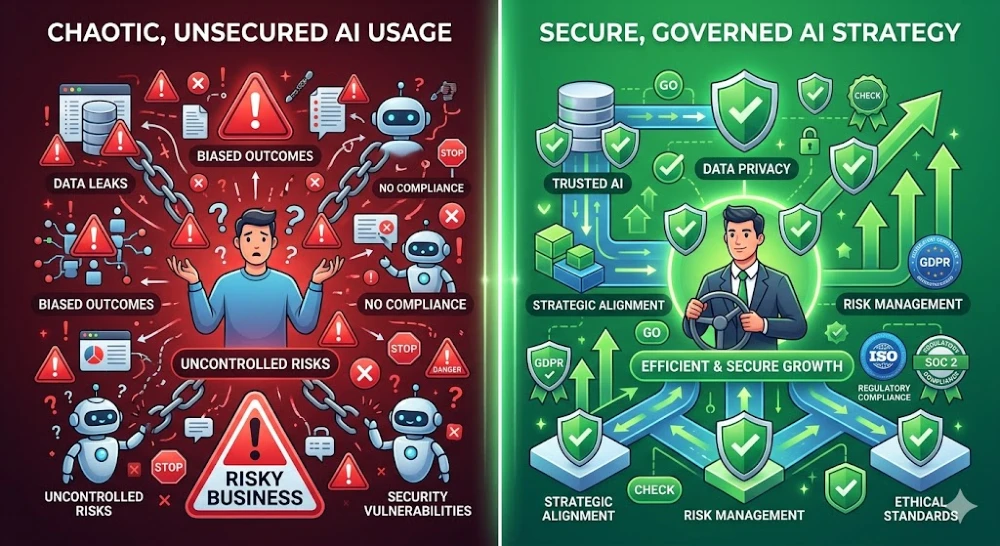
AI governance is the process of helping a business define how they’ll use AI responsibly — what data they’ll feed it, who has access, how they stay compliant with GDPR, HIPAA, or state-level privacy laws, and how they monitor for bias or errors.
It sounds like enterprise work. But SMBs need it too — maybe more than anyone, because one bad AI decision with customer data can sink a small business.
MSPs building AI governance audit packages are creating recurring revenue here. Think quarterly reviews, compliance check-ins, policy updates as regulations change. This isn’t break-fix work. This is sticky, high-margin, advisory-level engagement.
3. Secure AI Integrations
Most SMBs already have a tech stack — cloud storage, CRM, accounting tools, communication platforms. They’re not starting from scratch.
What they need is someone who can safely connect AI tools into that existing stack without creating security holes or data sovereignty issues.
MSPs with strong technical teams are building secure AI integration bundles — combining the AI tool implementation with ongoing monitoring and risk management. It’s a natural extension of what they already do with cybersecurity.
Speaking of which — if you haven’t read about AI-enabled cybersecurity for MSPs in 2026, that’s a closely related revenue stream worth understanding.
Why SMBs Are the Perfect Client for This
Let’s be direct about something.
Large enterprises have internal AI teams, legal departments, and innovation budgets. They’re figuring this out themselves — or hiring Big Four consultants to do it.
SMBs have none of that.
A 40-person accounting firm, a regional healthcare clinic, a mid-size logistics company — these businesses are desperate for trusted guidance. They already trust their MSP with their IT infrastructure. Extending that trust to AI strategy is a short bridge to cross.
The best MSP services for small businesses in 2026 article explores this client dynamic in more detail — worth reading before you build your service packages.
The Challenges MSPs Need to Solve First
Here’s where honesty matters.
Most MSPs aren’t struggling with the idea of AI monetization. They’re struggling with execution. Specifically:
- Building client-facing deliverables. A governance audit means nothing if you hand the client a disorganized Word doc. Clients need polished dashboards, clear reporting, and easy-to-understand portals.
- Marketing these new services. MSPs are great at IT. They’re often not great at positioning new advisory services or ranking on Google for “AI strategy consulting.”
- Staff capacity. Doing integration and development work for ten clients at once requires either hiring or smart staff augmentation.
These aren’t deal-breakers. But they’re real friction points that slow down AI monetization MSP 2026 momentum.
The IT staff augmentation model is one practical answer to the capacity problem — bringing in specialized talent without full-time overhead.
A 5-Step Checklist for MSPs Ready to Monetize AI
Start here. Don’t overthink it.
- Audit your current client base — Which clients have mentioned AI? Which are in regulated industries where governance is non-negotiable?
- Build one AI strategy package — Keep it simple. A discovery session, a roadmap document, a 30-day action plan. Price it and sell it.
- Create a governance template — Draft a basic AI use policy your clients can adopt. This becomes a paid deliverable.
- Identify two or three AI tools your stack supports — Focus on Microsoft 365 Copilot, Google Workspace AI, or whichever platforms your clients already use.
- Set up reporting — Clients need to see what their AI investment is doing. A simple dashboard builds trust and justifies ongoing fees.
The Window Is Open — But Not Forever
The MSPs who move on AI monetization MSP 2026 right now will own this space in their markets. The ones who wait will find that a competitor — or a direct AI vendor — has already taken that trusted-advisor seat at the table.
The Kaseya data is clear. Client demand is real. The revenue gap is massive. And the tools, templates, and expertise to close it exist today.
For MSPs looking at how to package all of this — strategy, governance, integrations, and the marketing to support it — the MSP growth online optimization services page outlines how execution support works in practice.
This is the growth engine MSPs have been looking for. It just requires a different kind of thinking — less reactive, more strategic.
Related Article