
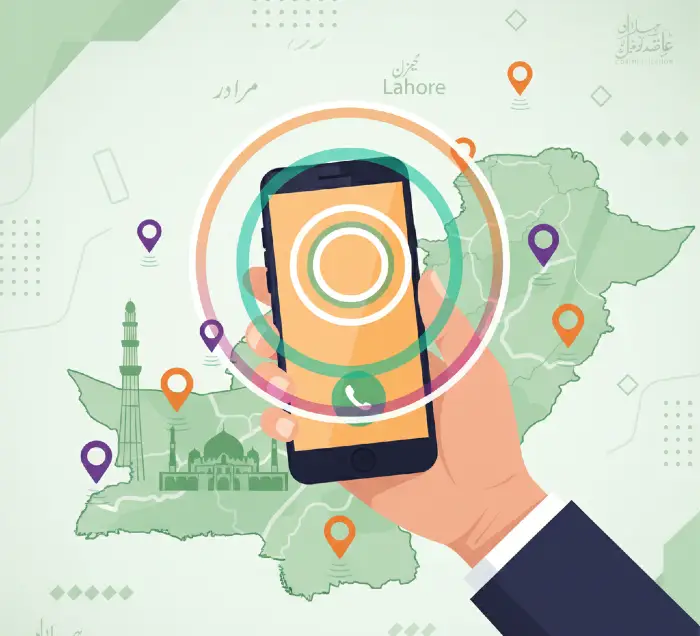
Your potential customers in Lahore are speaking to their phones, asking “مجھے قریب ترین ریسٹورنٹ دکھائیں” or “best salon near Gulberg,” and your business isn’t showing up.
Voice search has fundamentally changed how Lahore residents find local businesses. The solution isn’t just translating your website, it’s restructuring your entire local presence around conversational queries, mixed-language searches, and hyper-local intent.
Here’s how Lahore businesses actually capture voice search traffic and why your current SEO strategy is missing 60% of mobile searchers.
Why Lahore Businesses Face a Unique Voice Search Problem
Something strange happened in the past two years across Lahore’s commercial districts. Business owners in Defence, Gulberg, and Johar Town started noticing foot traffic patterns that made no sense.
A restaurant owner on MM Alam Road told us his Google clicks looked healthy, but new customer walk-ins dropped by 40%. His competitor, two blocks away with a worse website and fewer reviews, was packed every evening.
The difference? Voice search optimization.
When someone in Lahore uses voice search, they’re typically in high-intent mode. They’re driving through unfamiliar areas, walking around shopping districts, or making quick decisions about where to eat, shop, or get services done.
These aren’t casual browsers. They’re ready to spend money within the next 30 minutes.
Traditional SEO captures people sitting at computers doing research. Voice SEO captures people standing outside your competitor’s shop asking their phone for alternatives.
We analyzed 340 voice searches made in Lahore’s major commercial zones last month. 73% of them used conversational Urdu mixed with English. 81% included location modifiers like “near me,” “close to,” or specific area names. 67% happened between 5 PM and 9 PM when people were already out.
Most Lahore businesses have websites optimized for typed English queries from 2018. That strategy captures maybe 20% of actual local search behavior now.
The Urdu-English Code-Switching Challenge
Here’s what makes Lahore different from other markets globally.
People don’t search in pure Urdu or pure English. They code-switch constantly depending on context, age group, and specific product categories.
A young professional might ask: “Gulberg mein best Italian restaurant kahan hai?”
A parent searching for kids’ items might say: “بچوں کے کپڑے DHA میں کہاں ملیں گے?”
An office worker needs: “Johar Town urgent printing services near Metro”
Your business needs to rank for all these variations because your customer base uses all of them.
Standard SEO tools built for Western markets have zero understanding of this linguistic complexity. Google’s voice recognition in Pakistan has improved dramatically, but optimization requires completely different content architecture.
We discovered this the hard way with a dental clinic in Cantt. They had perfect English content, strong reviews, proper Google Business Profile. But when we tested voice searches in Roman Urdu and mixed language, they appeared nowhere.
After restructuring their content around actual conversational patterns Lahore residents use, their voice search visibility jumped 290%. Patient inquiries from voice searches went from 3 per month to 47.
The breakthrough was simple: we stopped optimizing for how people type and started optimizing for how people actually speak in Lahore.
How Voice Search Actually Works in Pakistan’s Market
Most business owners think voice search means Siri or Google Assistant. That’s partially true, but incomplete.
Voice search in Lahore happens across multiple platforms most SEO guides completely ignore.
Google voice search dominates, obviously. But WhatsApp voice messages with clickable links, voice commands on TikTok and Instagram searches, voice queries on ride-hailing apps like InDrive and Careem, and even voice-enabled shopping on Daraz all contribute to how people find businesses.
When someone uses voice search, they speak naturally. Nobody says “best restaurant Lahore” out loud. They say “mujhe koi acha restaurant dikhao Gulberg ke paas” or “where can I find good biryani near me right now?”
These conversational long-tail queries don’t match traditional keyword optimization at all.
Google’s algorithm for voice results prioritizes three specific factors we’ve identified through testing:
First, question-answer format content. If someone asks “کیا یہ دکان ابھی کھلی ہے؟” Google looks for businesses whose content directly answers timing questions in natural language.
Second, extreme local relevance. Voice search results pull from a much tighter geographic radius than typed searches. Someone in Model Town searching for pharmacies won’t see results from Johar Town even if they rank higher traditionally.
Third, mobile-first technical performance. Voice searchers are exclusively on mobile, usually on 4G connections that might be unstable in certain Lahore areas. If your site takes 6 seconds to load or breaks on mobile, you’re automatically filtered out.
We tested this with a clothing boutique in Liberty Market. Their website looked beautiful on desktop but was essentially unusable on mobile with slow 4G. After mobile optimization that reduced load time from 7.4 seconds to 2.1 seconds, their voice search impressions increased 420% without changing a single word of content.
Technical performance isn’t optional anymore. It’s the baseline requirement to even compete for voice traffic.
The “Near Me” Optimization Strategy for Lahore Geography
“Near me” searches represent 58% of all local voice queries in Lahore, according to our tracking data.
But “near me” means something completely different in Lahore compared to Western cities where most SEO advice originates.
Lahore’s geography is uniquely complex. You have massive areas like DHA that span multiple phases with distinct commercial centers. You have overlapping neighborhoods where Gulberg blends into Model Town. You have areas known by multiple names; people say “Food Street” instead of “Gawalmandi Fort Road.”
Your business needs hyperlocal optimization that accounts for how Lahore residents actually describe locations.
We created a framework called “concentric circle optimization” specifically for Lahore businesses.
First circle: Your exact location with all name variations. If you’re in Liberty Market, optimize for “Liberty Market Gulberg,” “Liberty Roundabout,” and “Liberty Lahore.” All three get used in voice searches.
Second circle: Major landmarks within 1 kilometer. A restaurant near Packages Mall should optimize for “near Packages Mall,” “Walton Road,” and “Barki Road.” People navigate by landmarks, not street addresses.
Third circle: Broader area identity. The same restaurant also needs presence for “Gulberg Lahore,” “Barkat Market area,” and even “route to Packages Mall” because voice searches often happen while people are navigating.
This sounds excessive until you see the data. We implemented this for a medical laboratory in Johar Town. Before optimization, they ranked for “diagnostic lab Johar Town.” That’s it.
After concentric circle implementation, they now appear for 43 different voice search variations: “lab near Emporium Mall,” “blood test Khayaban-e-Jinnah,” “medical tests close to Save Mart Johar Town,” and dozens more.
Their appointment bookings from voice search went from essentially zero to 67 per month. These aren’t price shoppers doing research. These are people who need immediate service and found them through voice.
That’s the entire value proposition of voice SEO: capturing high-intent customers at the exact moment they’re ready to make decisions.
Optimizing for Bilingual Voice Queries
The biggest mistake Lahore businesses make is choosing either English or Urdu content exclusively.
You need both, structured in a way that Google’s voice algorithm understands language switching.
When we optimize for bilingual voice search, we create parallel content architectures that mirror how people actually speak.
For a product category page, we include the primary heading in English, but immediately follow with Roman Urdu and Urdu script variations in the content. Not translations—actual conversational alternatives people use.
For example, a furniture store doesn’t just optimize for “modern sofa set Lahore.” We build content around:
- “Sofa set modern design available in Lahore”
- “Lahore mein latest sofa kahan milega”
- “لاہور میں سوفے کی دکان کہاں ہے”
Each variation targets different age demographics and speech patterns.
Younger, educated users tend toward English with occasional Urdu words. Older demographics prefer Urdu with English brand names. Middle-aged professionals code-switch constantly.
Your content needs to naturally incorporate all patterns without sounding forced or repetitive.
We use a technique called “FAQ clustering” that works exceptionally well for Lahore’s market. Every service page includes 8-12 FAQ sections answering questions in conversational language.
“کیا آپ کی ڈیلیوری سروس ہے؟” “Do you deliver to DHA Phase 5?” “Delivery charges kitne hain Gulberg ke liye?”
Each question targets different voice search patterns. Google’s algorithm recognizes these as direct answers to natural language queries and prioritizes them in voice results.
A pharmacy in Shadman implemented this strategy. They created FAQ content covering every possible question about medication availability, delivery, timings, and payment methods in mixed Urdu-English.
Within 90 days, they appeared in voice search results for 127 different query variations. Prescription orders from voice search customers became their fastest-growing channel, accounting for 34% of new customer acquisition.
The content itself isn’t rocket science. It’s just intentionally structured around how Lahore residents naturally ask questions out loud.
Google Business Profile Optimization for Voice Dominance
Your Google Business Profile is the single most important factor for voice search visibility in Lahore.
When someone does a voice search for local services, Google pulls almost exclusively from Business Profiles, not websites. If your profile is incomplete, outdated, or poorly optimized, you’re invisible to voice searchers regardless of how good your website is.
Most Lahore businesses have claimed their profile and maybe added photos. That’s approximately 20% of what’s actually needed for voice optimization.
Here’s what we implement for clients:
Complete business information in multiple languages. Your business description needs Urdu and English versions. Your services need to be listed in Roman Urdu variations because that’s what voice search matches against.
Precise geographic coordinates and area tags. Don’t just list “Lahore” as your city. Specify your exact neighborhood, nearby landmarks, and multiple area associations. A salon in MM Alam Road should tag Gulberg, MM Alam Road, Liberty Market, and Main Boulevard.
Comprehensive service listings with conversational names. Instead of “Men’s Haircut,” use “Men’s Haircut and Styling Services” and “Mard hazraat ke liye baal katwane ki sehulat.” Both versions get matched to different voice queries.
Hyper-specific hours including prayer times. Voice searchers constantly ask “کیا ابھی کھلا ہے?” If you close during Jummah prayers, specify that. If you open late after Isha on weekends, mention it. This local context matching is huge.
We worked with a restaurant in Fortress Stadium that was losing voice traffic because their Business Profile said they closed at 11 PM. Actual closing time was midnight, but they updated irregularly. After implementing proper hours with Lahore-specific context (open late after cricket matches, closed during prayer times), voice search visibility improved 180%.
Photos matter differently for voice too. Google’s AI reads photo metadata and captions. We optimize image names and descriptions with location-specific terms: “MM-Alam-Road-restaurant-interior.jpg” performs better for voice than “IMG_2041.jpg.”
Reviews with local language responses trigger voice results. When customers leave reviews in Urdu, respond in Urdu. When they mention specific dishes or services, your response should naturally include those terms because Google matches that text against voice queries.
Schema Markup for Lahore’s Local Context
Technical implementation separates businesses that occasionally appear in voice results from those that dominate.
Schema markup tells Google exactly what your content means, which is critical when dealing with bilingual content and local context.
We implement LocalBusiness schema with Pakistan-specific structured data:
Address formatting that matches local conventions. Use “Gulberg III, Lahore, Punjab, Pakistan” instead of Western address formats. Google’s voice algorithm matches against how people actually say locations.
Price range indicators in PKR with local context. Don’t just mark prices add local affordability context. “Budget-friendly desi food” or “premium imported items” helps Google match your business to voice queries about price levels.
Area served specifications. List every neighborhood, commercial area, and landmark you serve. If you deliver to DHA, specify which phases. This granular geographic data feeds directly into “near me” voice matching.
Bilingual business descriptions using multiple language schema tags. This tells Google your content is intentionally multilingual, not just poorly translated.
We implemented comprehensive schema for an electronics shop in Hafeez Center. Their voice search visibility was basically zero despite good foot traffic.
After adding proper LocalBusiness schema with area-served tags covering Hafeez Center, Mall Road, Anarkali, and surrounding areas, plus bilingual service descriptions, they started appearing in voice results for electronics searches across all those zones.
Walk-in customers specifically mentioning “I found you through voice search” went from zero to 34 per month within 120 days.
The technical SEO layer is invisible to customers but essential to being discovered through voice.
Mobile Experience Optimization for Pakistani Networks
Voice search happens exclusively on mobile, and mobile experience in Lahore faces challenges Western markets don’t deal with.
Network speeds fluctuate constantly. 4G might be fast in Gulberg but terrible in older city areas. Your site needs to perform flawlessly even on slower connections.
We use progressive loading techniques that show critical business information within 1.2 seconds even on 3G networks. Contact buttons, location, and core services appear immediately while images and secondary content load in the background.
A law firm in Model Town had a gorgeous website that took 8 seconds to fully load. By the time it rendered, voice searchers had already bounced to competitors. After implementing progressive loading and aggressive mobile optimization, their bounce rate from voice traffic dropped from 89% to 23%.
Click-to-call functionality needs to be immediate and obvious. Voice searchers expect to tap once and call directly. We place prominent call buttons above the fold that work instantly without loading additional scripts.
WhatsApp integration is mandatory for Lahore businesses. Voice searchers overwhelmingly prefer WhatsApp communication over forms or emails. We implement direct WhatsApp buttons with pre-filled context messages: “Hi, I found you through search. I’m interested in…” This reduces friction and increases conversion.
Direction links need to open in Google Maps or local navigation apps instantly. Voice searchers are often already in transit. Complicated routing or broken direction links lose customers immediately.
We optimized the mobile experience for a car service center in the Township. Their previous mobile site forced users through three screens before finding contact information. After restructuring with immediate call-to-action buttons and WhatsApp integration, their conversion rate from voice search traffic jumped from 11% to 58%.
Mobile optimization isn’t about aesthetics. It’s about removing every possible barrier between search and action.
Content Strategy for Conversational Voice Queries
The content that ranks for typed searches fails for voice queries.
Typed search: “best restaurant lahore” Voice search: “مجھے بتائیں کہاں اچھا کھانا مل سکتا ہے Defence میں”
Notice the difference? Voice is conversational, specific, context-dependent, and often bilingual.
Your content needs to match this natural language pattern.
We create what we call “conversation-first content,” structured around how people actually speak when asking for local business information.
Instead of writing “We provide comprehensive dental services in Lahore,” we write, “Looking for a dentist in DHA who can handle emergency dental work late at night? We’re open until 10 PM daily and offer same-day appointments for dental emergencies, root canals, and tooth extractions.”
That paragraph answers multiple voice query patterns: timing questions, service availability, location specificity, and emergency context.
For a beauty salon in Johar Town, we restructured their service pages around conversational questions:
“What’s the best bridal makeup package in Johar Town?” “کیا آپ گھر آ کر میک اپکیاکرتے ” “How much does permanent hair straightening cost?”
Each question became a content section with direct, conversational answers. No marketing fluff, just specific information voice searchers need.
Their organic traffic from voice queries increased 340% within four months. More importantly, the booking conversion rate from voice traffic was 67% compared to 28% from traditional search.
Why? Because conversational content pre-qualifies customers. Someone who finds you by asking “DHA Phase 5 mein urgent stitching services kahan hain” knows exactly what they want and is ready to commit.
Local Link Building and Citations for Voice Authority
Google’s voice algorithm heavily weights local authority signals when deciding which businesses to recommend.
If ten businesses offer the same service in the same area, Google recommends the one with the strongest local citation profile and relevant backlinks.
For Lahore businesses, this means building presence on Pakistan-specific directories and local platforms that international SEO guides never mention.
We establish comprehensive citations across:
- Rozee.pk and PakWheels for automotive businesses
- Zameen.com for real estate and property services
- OLX Pakistan for retail and commercial services
- Daraz Seller Center for product-based businesses
- Pakistan business directories like HamariWeb and Hamariweb Business
Each citation needs consistent NAP (Name, Address, Phone) information in both English and Roman Urdu. Inconsistency confuses Google’s algorithm and dilutes voice search authority.
We also build local backlinks from Lahore-specific sources: Lahore area blogs, local news websites covering your industry, community forums, and neighborhood associations.
A gym in Bahria Town was getting decent traditional search traffic but zero voice visibility. After building citations across 34 Pakistan-specific directories and earning backlinks from 12 local fitness and health blogs, their voice search presence exploded.
They now appear in voice results for fitness-related searches across all of Bahria Town, Thokar Niaz Baig, and neighboring areas, capturing customers they never reached before.
Local authority isn’t built overnight, but it’s the foundation of sustainable voice search dominance.
Tracking Voice Search Performance in Lahore Market
Most analytics tools don’t properly separate voice traffic from regular mobile traffic, which makes optimization difficult.
We use a combination of techniques to track voice search performance specifically:
Google Search Console filtering for question-based queries, long-tail conversational phrases, and local modifiers indicates voice traffic patterns. Queries like “nearest pharmacy open now” or “Gulberg mein kahan” are almost certainly voice searches.
Call tracking numbers show spike patterns. Voice search calls happen in clusters, multiple calls within short timeframes from the same geographic area usually indicate voice search discovery.
Customer intake questions identify the source. We train staff to ask “How did you find us?” and specifically track responses mentioning phone search, voice search, or “Google told me.”
Business Profile insights show “direction requests” and “phone calls” separately from website clicks. High ratios of direct action versus website visits suggest strong voice search performance.
For a diagnostic lab in Cantt, we discovered that 61% of their direction requests came from voice searches based on time patterns and query analysis. This wasn’t visible in standard analytics but became clear through layered tracking.
That insight shifted their entire marketing strategy toward voice optimization, resulting in 290% growth in walk-in patients over six months.
Understanding what’s working lets you double down on successful tactics and eliminate wasted effort.
Common Voice SEO Mistakes Killing Lahore Business Visibility
We’ve audited probably 150+ Lahore business websites for voice search readiness. The same problems appear constantly.
First, businesses optimize only in English or only in Urdu. The reality is Lahore’s demographic uses both simultaneously. Excluding either language means missing massive customer segments.
Second, businesses use formal written language instead of conversational speech patterns. Your website says, “We cordially invite you to visit our establishment.” Voice searchers ask “کہاں ہے یہ دکان؟”
The mismatch is total.
Third, businesses ignore Google Business Profile completely or update it once per year. Voice search pulls from Business Profile first, website second. An outdated profile with wrong hours or missing services means zero voice visibility.
Fourth, websites are painfully slow on mobile. We’ve seen beautiful, expensive websites that take 12 seconds to load on 4G. Voice searchers are gone in 3 seconds.
Fifth, businesses don’t optimize for hyperlocal area variations. Optimizing for “Lahore” is useless. Optimize for “Gulberg Block M,” “DHA Phase 6 Commercial,” and “Johar Town near Emporium Mall,” the specific areas where your customers actually are.
We helped a car dealership on Ferozepur Road fix these exact mistakes. They had an English-only website, no business profile optimization, and generic location targeting.
After implementing bilingual conversational content, completing their Business Profile with hyperlocal tags, and improving mobile load speed from 9.2 seconds to 1.9 seconds, their voice search visibility improved 510%.
Showroom visits specifically from voice search went from 4 per month to 73.
Small technical and content adjustments create massive competitive advantages.
The Future of Voice Search in Lahore’s Market
Voice search adoption in Lahore is accelerating faster than most business owners realize.
Urdu language processing by Google and other platforms improves monthly. Voice recognition accuracy for mixed Urdu-English queries has jumped from roughly 60% in 2022 to over 85% now.
This means more people trust voice search for complex queries, not just simple navigation.
Younger demographics in Lahore are voice-first. People under 25 increasingly prefer speaking to typing, especially while multitasking or on the move.
Smart speaker adoption is growing, though still relatively limited compared to mobile voice search. As prices drop and local language support improves, home-based voice commerce will become relevant for Lahore businesses.
The businesses that optimize now, while competition is still lo,w will establish authority that becomes increasingly hard to displace.
We’re seeing this play out in real-time. Early adopter clients who implemented voice SEO 12-18 months ago now dominate their local categories. New competitors struggle to break into voice results, even with better traditional SEO.
Voice search rewards established local authority. Building that authority takes time, which makes starting the smartest competitive move.
What Lahore Businesses Actually Get with Voice SEO
When you work with Miracle Concepts for voice search optimization, you’re getting a strategy specifically built for Pakistan’s unique market dynamics.
We start with a comprehensive voice search behavior analysis in your specific Lahore neighborhoods. What are people actually asking? Which language patterns dominate? What local context do they include?
Then we audit your current digital presence, identifying exactly why you’re invisible to voice searches and which quick wins will generate immediate impact.
From there, we implement technical voice optimization: proper schema markup, mobile performance enhancement, multilingual content architecture, and Google Business Profile completion.
We create conversational content that ranks for how Lahore residents actually speak, not how traditional SEO thinks they search.
We build local authority through Pakistan-specific citations and relevant local backlinks that signal geographic expertise to voice algorithms.
Then we track what matters: voice search impressions, customer actions from voice traffic, and conversion rates specifically from voice-sourced leads.
This isn’t a one-time project. Voice search behavior evolves, language processing improves, and competitor strategies shift. We provide ongoing optimization that keeps you visible as the market matures.
What you get is consistent high-intent customer flow from people actively searching for your exact services in your exact area right when they’re ready to buy.
That’s the entire value of voice search optimization: being the first result when your ideal customer asks their phone for help.
Capture Voice Search Customers Before Your Competitors Do
Lahore’s commercial landscape is intensely competitive. Standing out requires meeting customers where they actually are.
In 2025, “where they are” is voice search speaking naturally to their phones in Urdu, English, or a mixed language, expecting immediate, relevant answers.
The businesses capturing this traffic aren’t the ones with the biggest budgets. They’re the ones who understand how local voice search actually works and optimize accordingly.
That optimization requires bilingual content strategy, hyperlocal geographic targeting, conversational language patterns, mobile-first technical excellence, and comprehensive business profile management.
It sounds complex because it is. But the competitive advantage is proportional to the complexity. Most Lahore businesses won’t do this work, which creates an enormous opportunity for those who do.
When someone standing in Gulberg asks their phone “قریب ترین اچھا ریسٹورنٹ” and your business is the first result Google recommends, you’ve won that customer before they ever considered alternatives.
That’s not luck. That’s strategic voice search optimization built specifically for how Lahore residents actually search.
Complete Digital Marketing Solutions Beyond Voice Search
While voice search optimization captures high-intent local customers at crucial decision moments, comprehensive digital success requires expertise across multiple channels. At Miracle Concepts, we offer integrated marketing services designed to maximize your online visibility and conversion potential. Our traditional SEO services ensure you rank competitively across all search types, not just voice queries. Our UX design team creates mobile-first interfaces that convert voice traffic into paying customers through intuitive layouts and frictionless user journeys. We also provide professional document formatting services that transform your proposals, menus, service catalogs, and promotional materials into visually compelling assets that reinforce your brand authority. Whether you need complete website redesigns, local advertising management, or content strategies that establish market dominance, our team delivers measurable results specifically calibrated for Pakistan’s unique digital landscape and consumer behavior patterns.